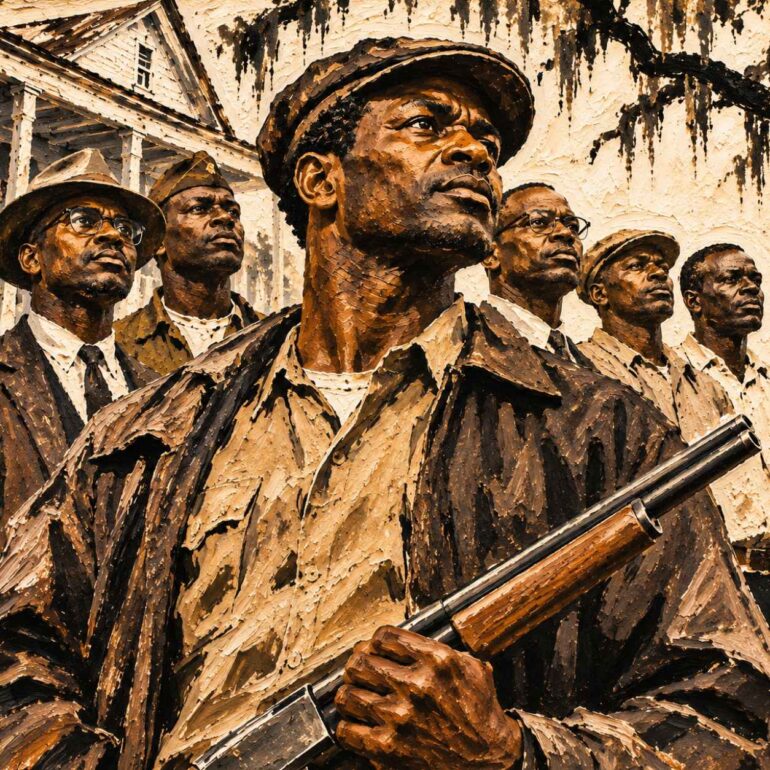
The Deacons for Defense and Justice: The chapter of the civil rights movement I wasn’t taught in school.
Apparently, my history textbooks came with a rather selective table of contents.
I learned about Rosa Parks, Martin Luther King Jr., peaceful marches and the Civil Rights Act. What I don’t recall learning about was a group of Black men who decided that peacefully requesting their constitutional rights did not require peacefully accepting their own funerals.
Allow me to introduce you to the Deacons for Defense and Justice.
When Uncle Sam’s Veterans Came Home
In 1964, in Jonesboro, Louisiana, a group of Black men organized to protect their communities and civil rights workers from the Ku Klux Klan.
Many were veterans of World War II or the Korean War.
Imagine serving a country that sent you overseas to defend freedom, only to return home and discover that freedom apparently had geographical restrictions determined by the color of your skin.
The irony is exhausting.
The Deacons emerged as racial intimidation and violence threatened local civil rights organizing. The Congress of Racial Equality (CORE) was working to dismantle segregation and register Black voters. The Klan, having apparently mistaken democracy for a whites-only membership club, responded with threats and violence.
The Deacons believed in armed self-defense. Their purpose was protection, not the initiation of violence.
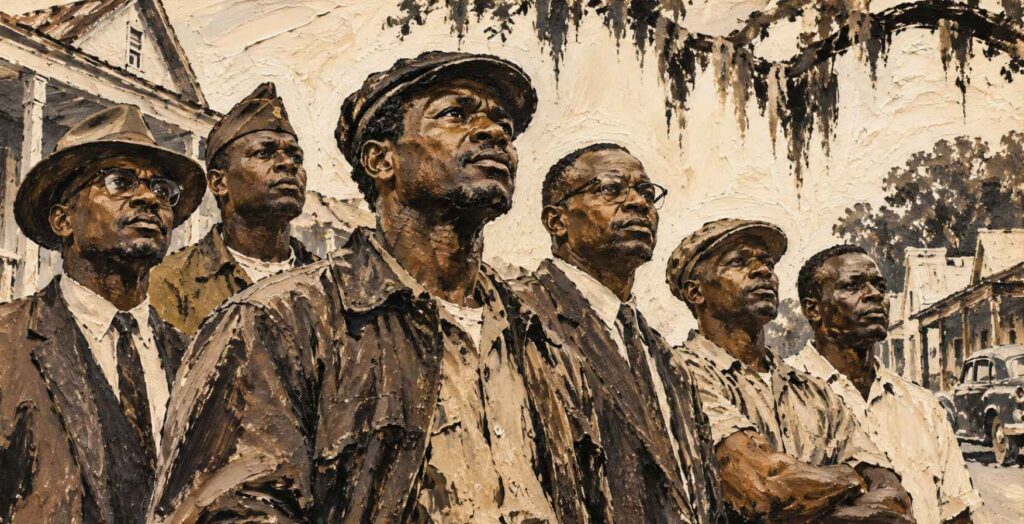
Put Some Names on That History
These were real men with occupations, families, responsibilities and considerably more courage than their historical obscurity would suggest.
Earnest “Chilly Willy” Thomas
A founding figure and early leader, Thomas helped organize community protection and establish the organization’s presence beyond Jonesboro.
Frederick Douglass Kirkpatrick
A minister, educator, athletic coach and folk musician, Kirkpatrick helped establish the Deacons and later used music to document the civil rights struggle.
Percy Lee Bradford
An early organizer who served as president of the Jonesboro chapter. His leadership helped formalize the community’s collective defense efforts.
Cosetta Jackson
A cab driver and treasurer of the organization who also encouraged Black residents to register to vote. Apparently, even a cab ride could become an exercise in civic engagement.
Allen Scherrah
The organization’s financial secretary. Although readily available historical accounts provide considerably less information about his personal life, surviving records document his administrative role.
Not every historical figure leaves behind a conveniently packaged biography. That doesn’t make their contribution insignificant.
Beyond Jonesboro
In 1965, the organization expanded into Bogalusa, Louisiana, where Charles Sims became one of its prominent leaders.
The Deacons’ presence eventually extended across Louisiana and into other Southern states. In 1966, members helped protect participants in the March Against Fear in Mississippi.
Meanwhile, the FBI was documenting their activities.
Interesting, isn’t it, how Black Americans organizing to protect themselves could attract the attention of federal investigators while the circumstances that made such protection necessary had persisted for generations?
Nonviolence Had Protection
What fascinates me about this history is that nonviolent activism and armed self-defense were not always mutually exclusive.
The Deacons protected people participating in peaceful demonstrations. They helped create conditions in which civil rights workers could continue their work despite intimidation.
Their existence challenges the conveniently simplified version of the civil rights movement that many of us inherited.
There were people marching, people organizing, people negotiating and people protecting those doing the marching.
All of them mattered.
Another Chapter Worth Remembering
By the late 1960s, the Deacons’ prominence had diminished, but their place in American history remains significant.
I am not sharing this story to diminish the accomplishments of the nonviolent civil rights movement. I’m sharing it because that movement was considerably more complex than the abbreviated version many of us were taught.
Black history is not simply a collection of stories about what happened to Black people. It is also the history of what Black people did in response.
And these men deserve to be remembered by name.
Authentic historical photographs
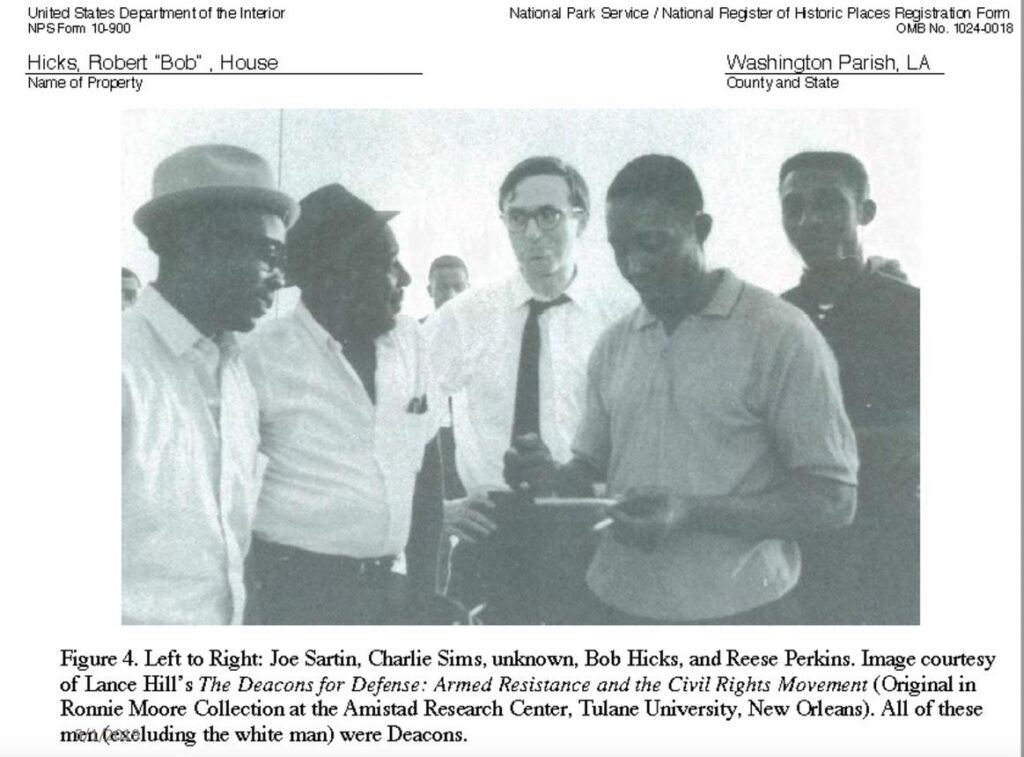 Bogalusa, Louisiana, 1965
The archival catalog identifies Charles Sims and Royan Burris alongside local officials.
The Ronnie Moore Papers – Amistad Research Center
Credit: Amistad Research Center.
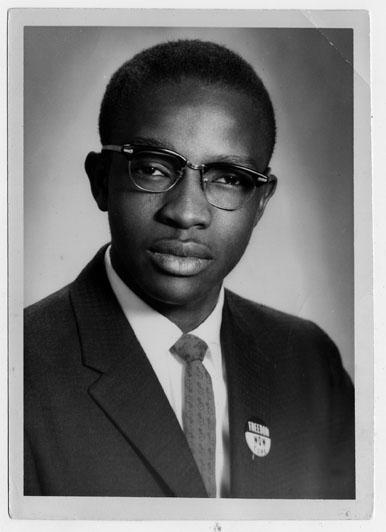 Bogalusa Civil Rights March
The archive’s caption includes Deacons members A. Z. Young and R. T. Young.
Credit: Ronnie Moore Papers, Amistad Research Center.
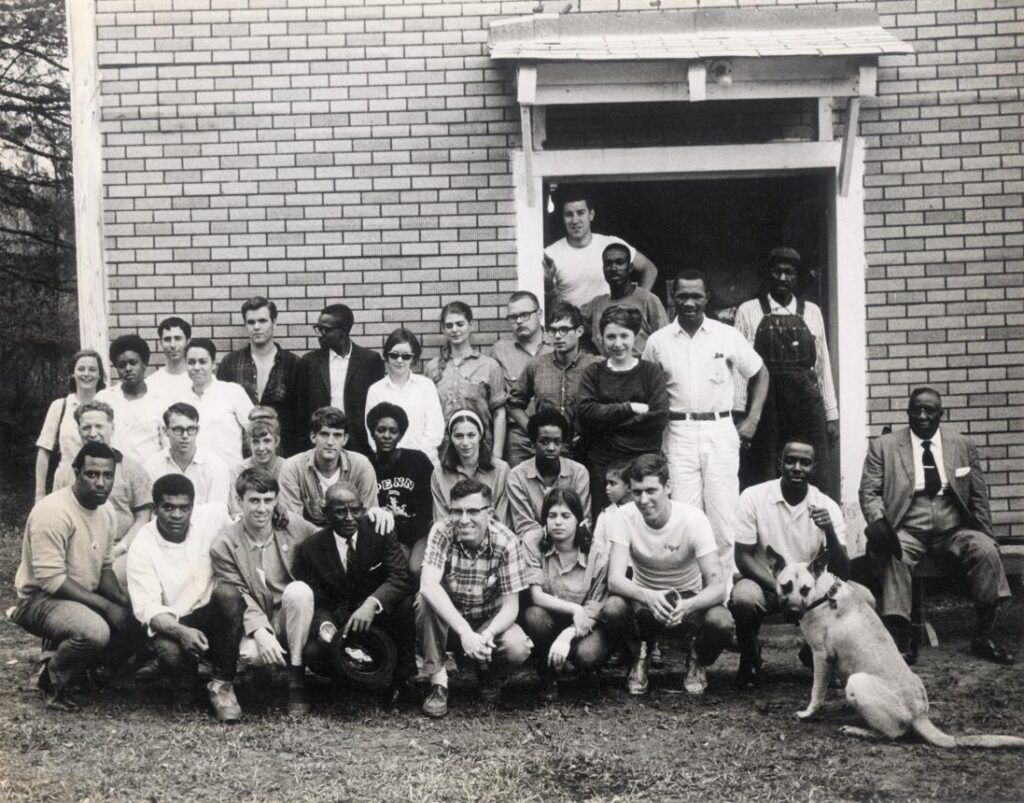 Founding members remembered
WWNO’s 2015 coverage includes a portrait captioned as founding member Charlie White.
Credit: Olivia McClure.
Once again, I find myself saying something that has become increasingly familiar throughout my historical research:
DAMN Y’ALL TO HELL FOR NOT TEACHING ME THIS…
~~ Kimberly
Historical References